


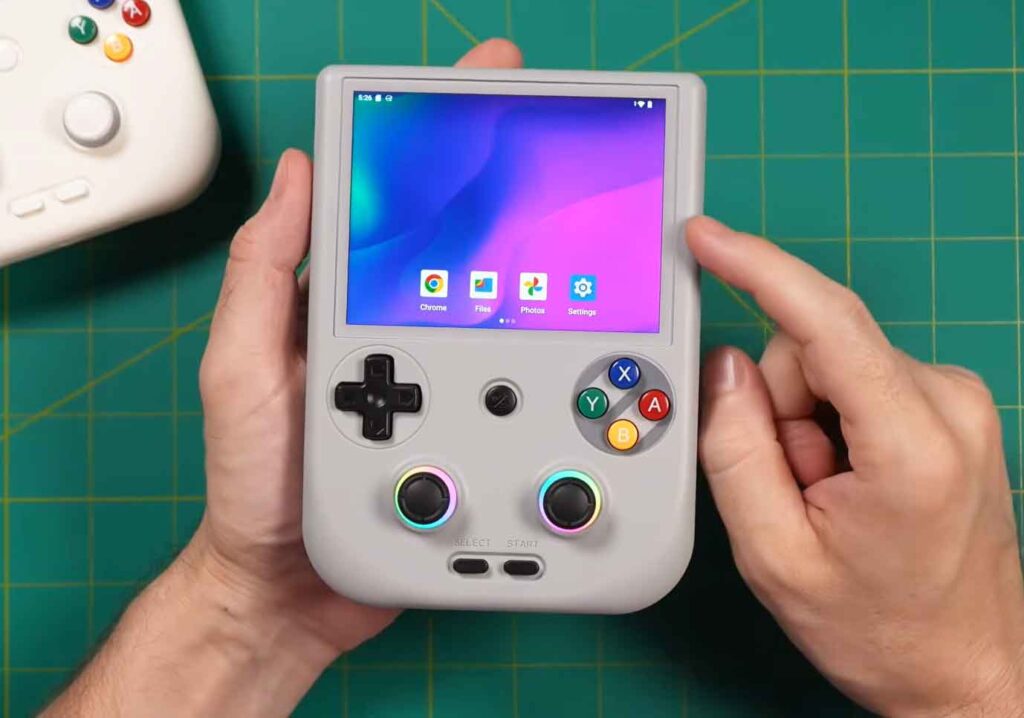
Vertical retro handhelds hold a special nostalgic charm, but for years they have occupied a performance tier strictly limited to PlayStation 1 and lightweight Nintendo 64 titles. In our Anbernic RG406V review, we examine Anbernic’s most ambitious vertical console to date, a machine engineered to bridge the gap between classic Game Boy ergonomics and demanding sixth-generation console emulation.

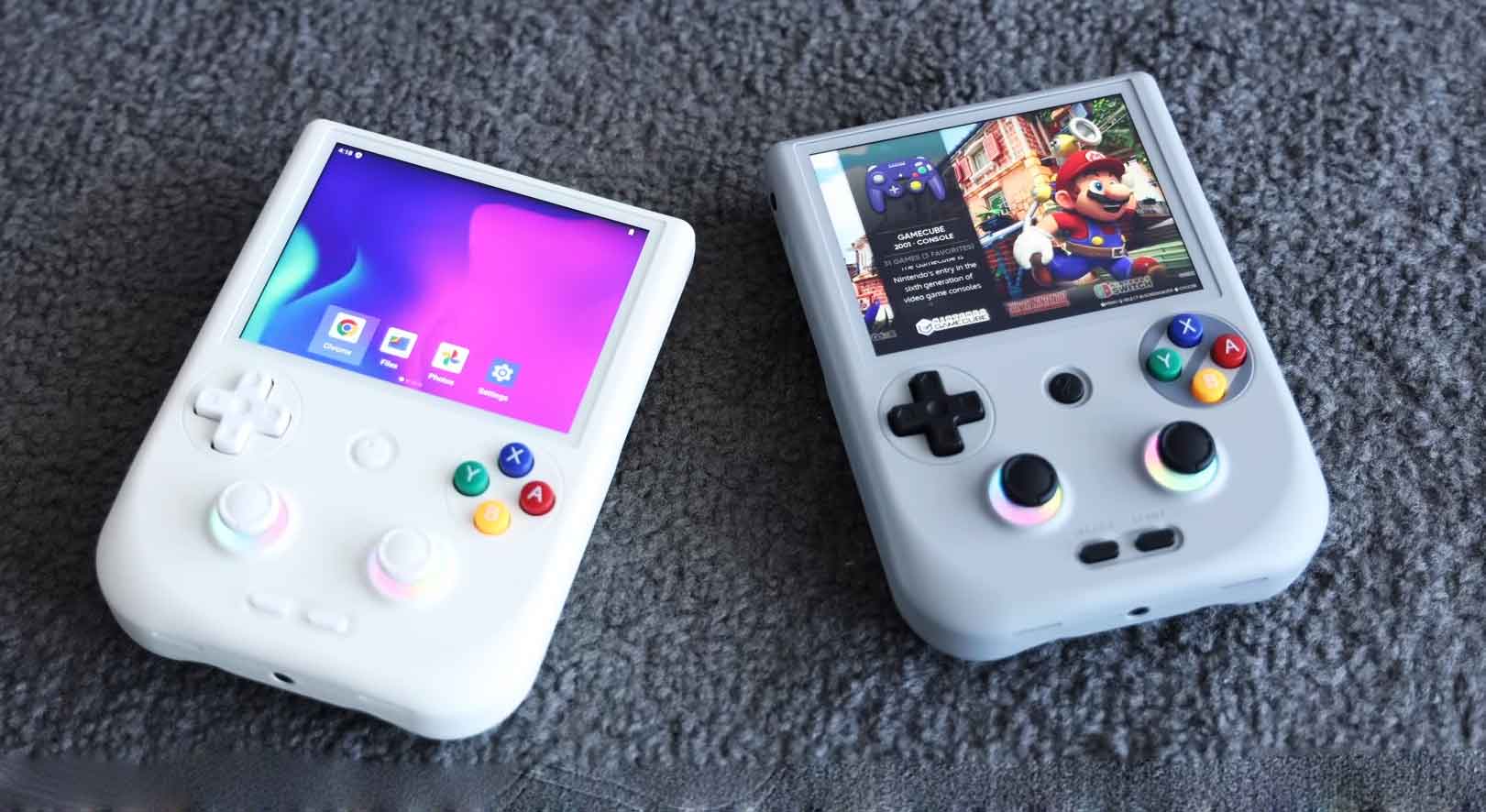
By transplanting the 6nm Unisoc T820 processor from the horizontal RG556 and pairing it with a high-resolution 4:3 touchscreen, Anbernic has delivered what may be the best vertical retro handheld on the market. From hardware tolerances and display integer scaling to sustained thermal stability and real-world unisoc t820 ps2 emulation, here is our full, in-depth evaluation.
Anbernic RG406V Specifications & Overview
| Hardware Category | Anbernic RG406V Technical Specifications |
|---|---|
| Display | 4.0-inch IPS Touchscreen, 960 × 720 Pixels (4:3 Native Aspect Ratio), OCA Full Lamination |
| Chipset (SoC) | Unisoc T820 (6nm EUV) | Octa-Core (1x A76 @ 2.7GHz + 3x A76 @ 2.3GHz + 4x A55 @ 2.1GHz) |
| Graphics (GPU) | Quad-Core ARM Mali-G57 @ 850MHz |
| RAM & Storage | 8GB LPDDR4X | 128GB UFS 2.2 Onboard Storage (MicroSD expandable up to 2TB) |
| Controls & Sensors | Large-Angle 3D Hall Effect Joysticks with RGB Lighting, Analog Triggers, Six-Axis Gyroscope |
| Cooling System | Active High-Speed Fan with Copper Heat Pipe Exhaust |
| Battery & Charging | 5,500 mAh Polymer Li-Ion (~8 Hours Tested Runtime) | 5V/2A USB-C Fast Charging |
| Video Output & I/O | USB Type-C with 1080p DisplayPort Alt Mode Output, 3.5mm Audio Jack, Dual Hi-Fi Speakers |
| Wireless Connectivity | Dual-Band 2.4GHz / 5GHz Wi-Fi (802.11ac), Bluetooth 5.0 |
| Operating System | Android 13 with Quick-Switch Anbernic Launcher |
| Weight & Dimensions | 386g | 145mm × 105mm × 29mm (Ergonomic Contoured Rear Grips) |
| Where to Buy | Check AliExpress Official Store | Check Amazon Listings |
Direct Manufacturer Deal
Anbernic RG406V
Unisoc T820 | 4.0″ 960×720 4:3 IPS | 8GB RAM | Hall Sticks
🔥 View Official Deal on AliExpress
🛒 Check Availability on Amazon


Design, Ergonomics, and Build Quality
The first element that demands attention when handling the RG406V is its physical presence. Unlike ultra-compact horizontal consoles, this device embraces a substantial, comfortable vertical footprint. Measuring 29mm at its thickest point and weighing in at 386 grams, it is significantly heftier than budget pocket devices, but this bulk serves an intentional ergonomic purpose.
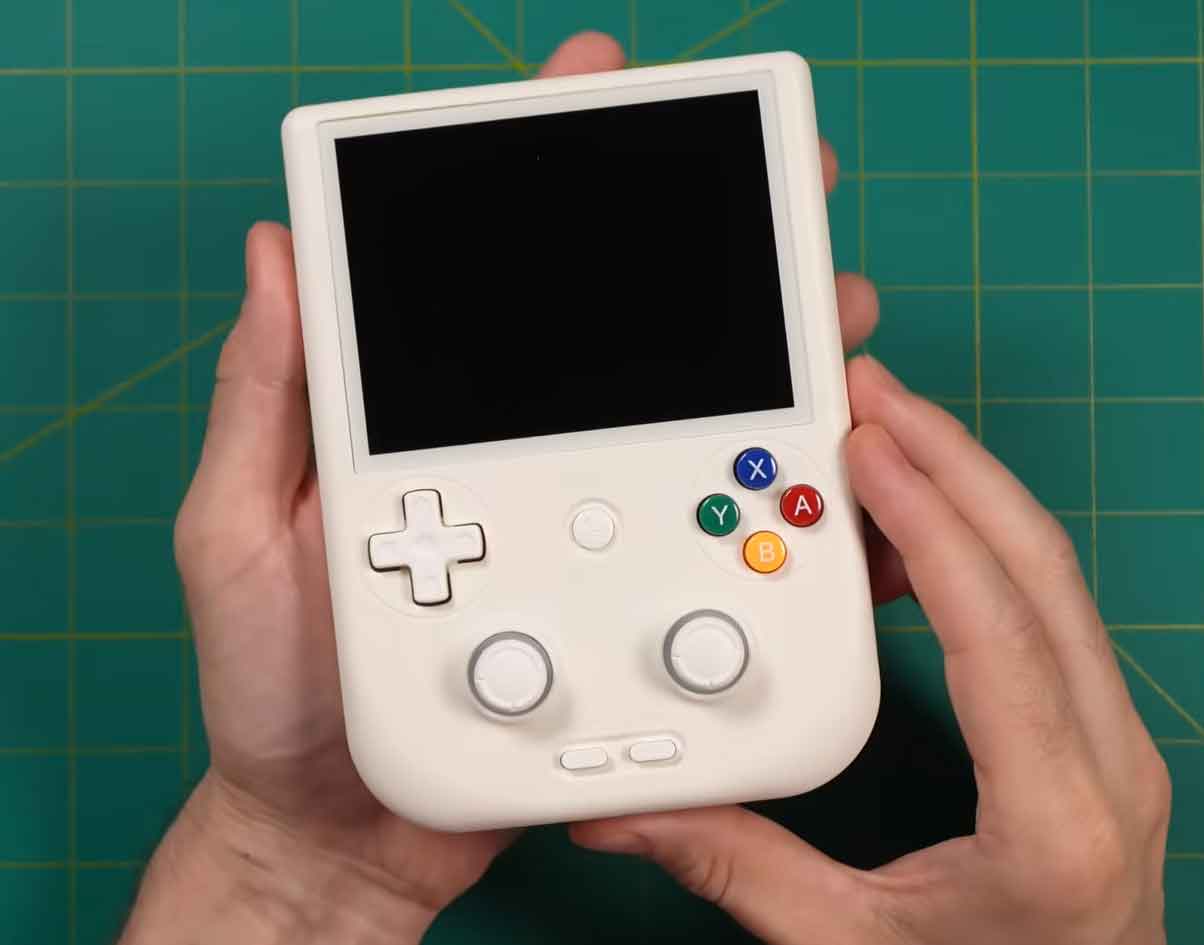

The rear housing features sculpted palm swells—frequently described by the community as “love handles”—that fill the hands naturally. This contours the chassis so that your index fingers rest comfortably over the stacked shoulder triggers without causing wrist cramping during two-hour gaming sessions.

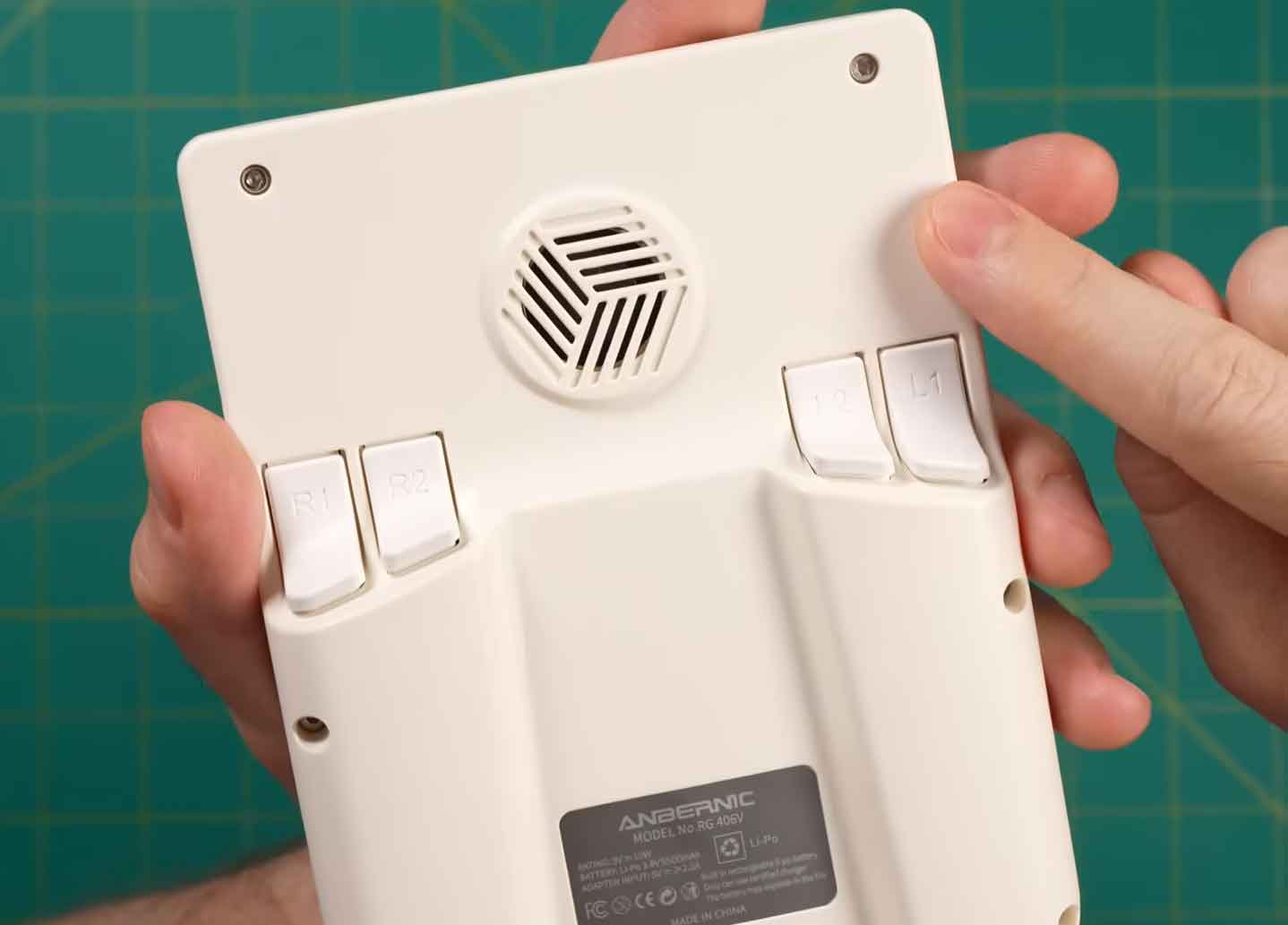
The control layout represents a notable generational upgrade in the rg406v vs rg405v comparison:
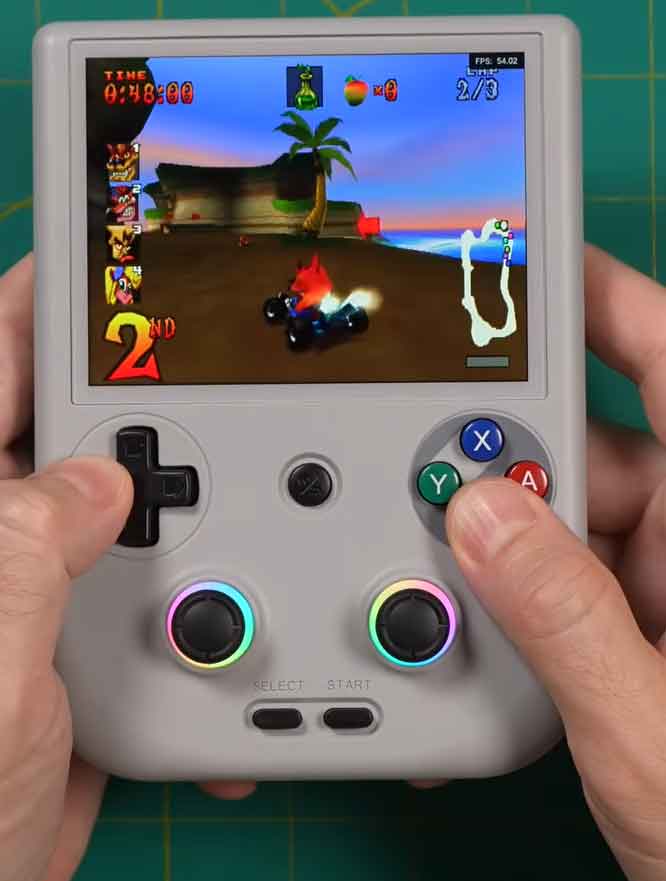
- 3D Hall Effect Joysticks: The thumbsticks utilize magnetic sensors that completely prevent stick drift over time. They feature customizable 16-million-color RGB halo rings with multiple illumination modes (breathing, marquee, constant).
- D-Pad & Action Buttons: The conductive rubber D-pad provides tactile pivot action, excelling at diagonal execution in fighting titles like Street Fighter III: 3rd Strike. The face buttons are crisp with generous travel.
- Stacked Shoulder Triggers: Anbernic has moved to proper inline stacked L1/L2 and R1/R2 buttons, providing true analog input throw for driving titles on Dreamcast and PS2.
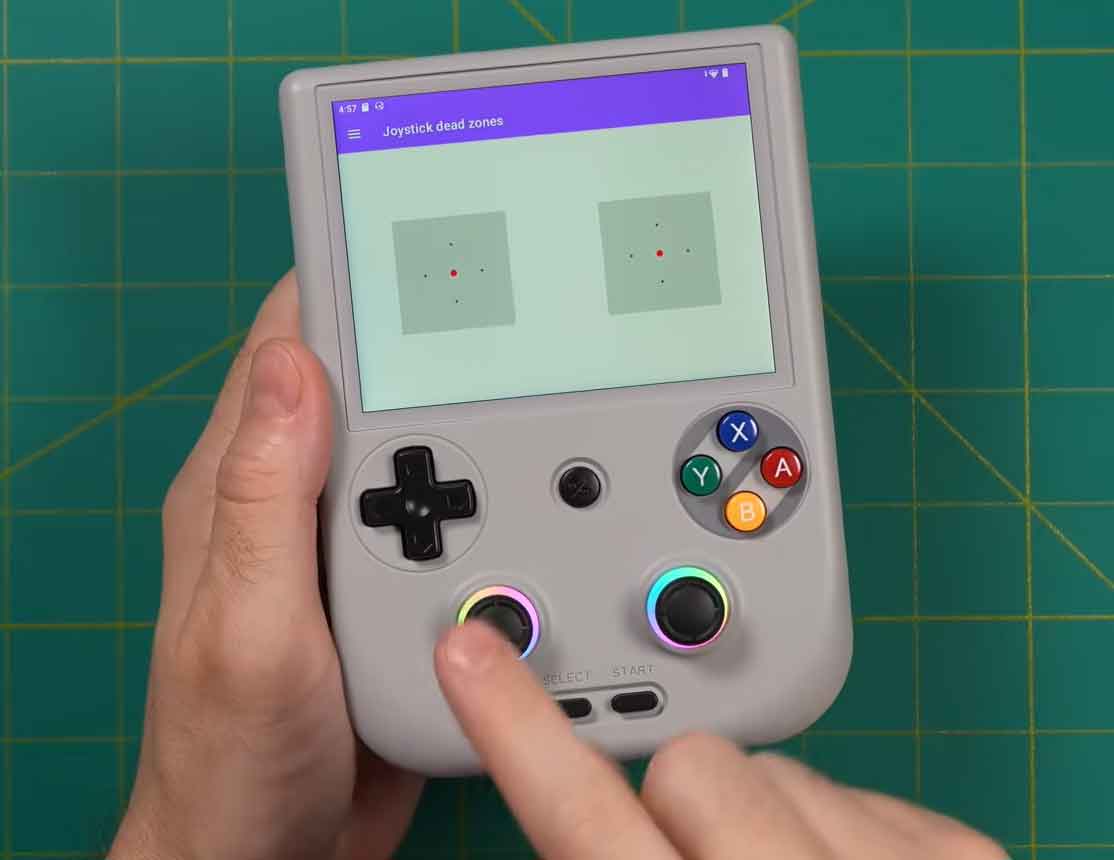

Display Quality: The 4.0-inch 960×720 4:3 Sweet Spot
The centerpiece of the RG406V is its custom 4.0-inch IPS touchscreen. While standard 16:9 widescreen handhelds force retro titles into letterboxed windows with black side bars, the RG406V’s 4:3 native aspect ratio fills the entire panel with authentic geometry.
The 960 × 720 pixel resolution is specifically tuned for retro scaling math:
- PlayStation 1 & N64 (240p): Scales at a clean, pixel-perfect 3x integer scale with zero shimmering artifacts.
- PlayStation 2 & Dreamcast (480p): Runs at a sharp 1.5x resolution multiplier in AetherSX2/NetherSX2 and Flycast, rendering 3D textures with noticeable clarity while retaining native 4:3 full-screen viewing.
- Color & Brightness: Full OCA lamination reduces internal surface reflections. Maximum brightness reaches over 450 nits, ensuring outdoor playability with deep contrast and rich saturation.
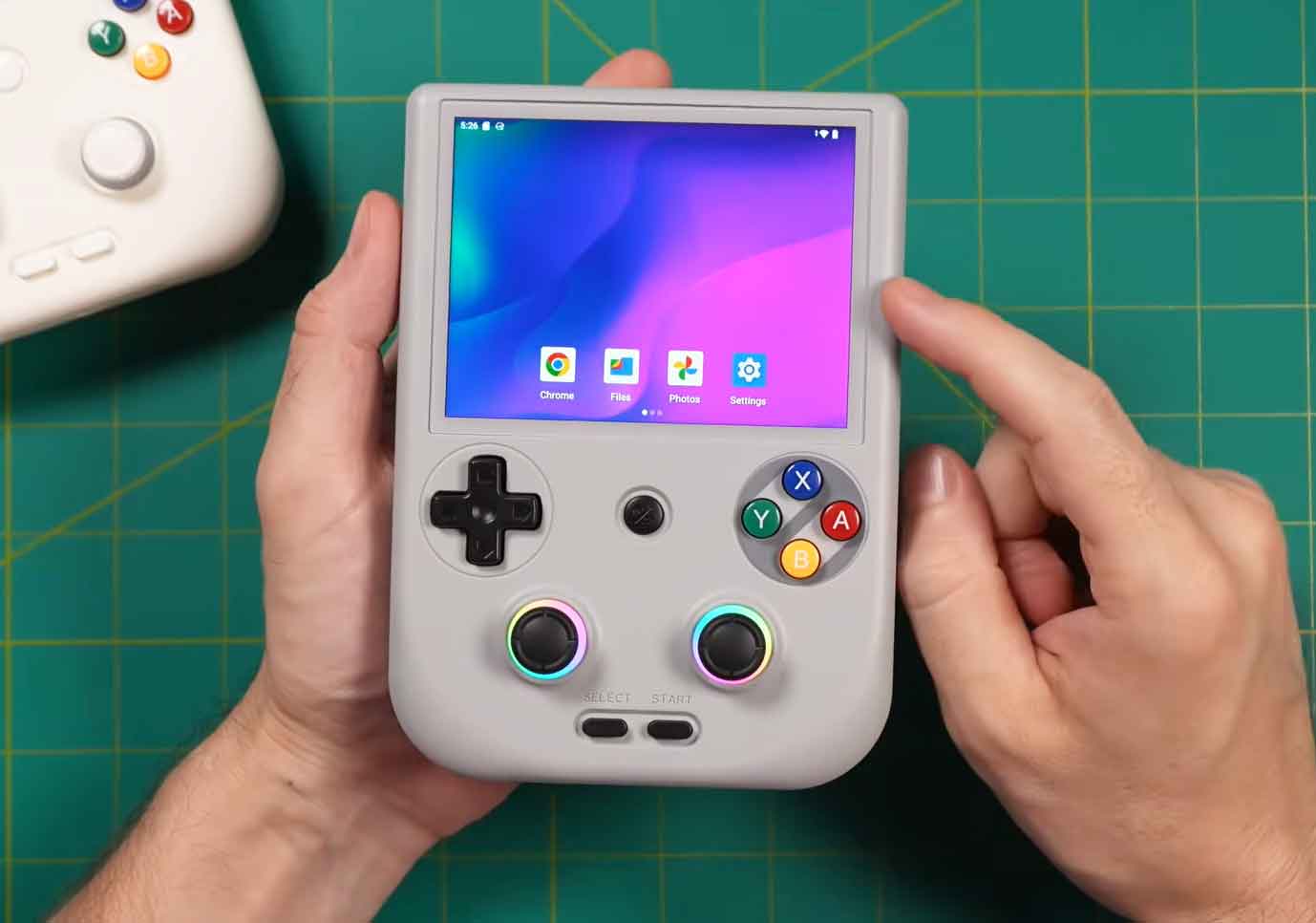

Emulation Performance: Unisoc T820 Gaming Benchmarks
Powering the console is the 6nm Unisoc T820 chipset mated to 8GB of LPDDR4X RAM and high-speed UFS 2.2 flash storage. In our extensive testing across various emulation cores, performance proved remarkably capable:
- PlayStation 2 (NetherSX2 / Vulkan): High-demand classics like God of War II, Final Fantasy X, Gran Turismo 4, and Burnout 3: Takedown maintain a locked 50–60 FPS at 1.5x resolution. Only the most notoriously taxing titles (e.g., Shadow of the Colossus) require minor underclocking tweaks.
- Nintendo GameCube & Wii (Dolphin): The Legend of Zelda: The Wind Waker, Super Mario Sunshine, and F-Zero GX run smoothly at 1.5x native resolution with high frame stability.
- Nintendo 3DS & Saturn (Citra & Yaba Sanshiro): The 4:3 screen geometry accommodates single-screen 3DS titles with ease, while Saturn titles execute at full speed with zero frame drops.
- Native Android Titles: Games like Dead Cells, Genshin Impact (Low-Medium settings), and Minecraft run fluidly with full physical button mapping.
Emulation Takeaway: The Unisoc T820 elevates the vertical handheld category out of the 16-bit/32-bit ceiling, providing reliable, high-frame-rate 3D performance across PS2, GameCube, and Dreamcast libraries.
Thermals, Fan Acoustics, and Battery Life
To prevent the thermal throttling that plagued older metal and passive vertical devices, Anbernic integrated an active cooling system consisting of a high-speed centrifugal turbofan and a copper heat pipe.
During a 90-minute stress test running Devil May Cry 3, the chassis remained comfortably cool to the touch (peaking at 36.5°C on the backplate), while fan noise remained subtle and unnoticeable over the front-firing dual speakers.
Battery endurance is equally robust:
- 5,500 mAh Capacity: Yields approximately 7 to 8.5 hours of continuous gameplay on PS1, GBA, and SNES titles, and around 4.5 to 5.5 hours on heavy PS2 and GameCube workloads.
- Charging & DisplayPort: Supports standard 5V/2A USB-C charging (reaching 100% in roughly 3.5 hours). Furthermore, its DisplayPort Alt Mode output allows you to connect the handheld directly to a TV or monitor at 1080p resolution.

Software Experience: Android 13 & Anbernic Frontend
The RG406V runs a clean build of Android 13 with full Google Play Store support out of the box. A dedicated hardware button on the side allows instant switching between the stock Android desktop and Anbernic’s clean tile-based emulation frontend.
For advanced enthusiasts, community frontends like Daijisho, Beacon Launcher, and EmulationStation-DE install seamlessly, providing automatic box-art scraping and per-system categorization.
Pros and Cons Breakdown
Advantages
- Stunning 4.0-inch 960×720 IPS display with ideal 4:3 aspect ratio scaling.
- Potent 6nm Unisoc T820 chipset handles the vast majority of the PS2 and GameCube catalog.
- High-precision 3D Hall Effect analog sticks with customizable RGB rings.
- Deep, sculpted rear hand grips eliminate vertical handheld hand cramping.
- Active cooling fan prevents thermal throttling during extended sessions.
- Generous 5,500 mAh battery with 1080p USB-C video output.
Drawbacks
- Chunky 386g weight makes it less pocketable than smaller 3.5-inch devices.
- 4:3 screen creates pillarboxing on modern 16:9 Android games and PSP titles.
- Stock Anbernic launcher scraper is basic compared to third-party Android frontends.
The Final Verdict: Is the Anbernic RG406V Worth Buying?
The Anbernic RG406V represents the maturation of the vertical retro console. By addressing the traditional pitfalls of the form factor—cramped shoulder buttons, undersized 480p screens, and thermal throttling—Anbernic has built a device that is genuinely enjoyable to hold for long sessions.
If you primarily play retro systems from the 8-bit era up through PS1, N64, Dreamcast, GameCube, and PS2, the combination of a sharp 4:3 IPS screen, drift-free Hall joysticks, and the Unisoc T820 chipset makes the RG406V the most complete vertical handheld currently on the market.
Check Live Pricing & Store Discounts:
Discounts and bundles update frequently across official storefronts. Click below to view current pricing and active coupons:
Source 1 (RetroSpecGame Hardware Specs) |
Source 2 (GBAtemp Hardware Review) |
Source 3 (RetroHandhelds Review)
Frequently Asked Questions (FAQ)
Can the Anbernic RG406V run PS2 games at full speed?
Yes. Powered by the 6nm Unisoc T820 processor and 8GB RAM, the RG406V runs the vast majority of the PlayStation 2 and GameCube catalog at 1.5x resolution (720p) at a full 60 FPS using NetherSX2 and Dolphin.
What is the screen resolution on the Anbernic RG406V?
The RG406V features a 4.0-inch IPS touchscreen with a 960 × 720 pixel resolution at a 4:3 native aspect ratio, providing clean 3x integer scaling for PS1/N64 and 1.5x scaling for PS2.
Does the RG406V have Hall Effect joysticks?
Yes. The console comes equipped with large-angle 3D Hall Effect analog joysticks featuring customizable 16-million-color RGB lighting rings and complete drift prevention.
Also read:
FiiO M33 R2R vs. FiiO M23: Which Audiophile DAP Wins? (2026 Review)
Sony PS6 Handheld Leak: 5 Reasons Why Price Could Top $600
ASUS ROG Xbox Ally X20 Announced: 5 Major Upgrades & $1,299 Price Tag
Steam Deck OLED vs ROG Ally X: 7 Tested Differences & Best Pick
ROG Phone 8 Pro vs RedMagic 9 Pro: Which Gaming Phone Wins?
S24 Ultra vs iPhone 16 Pro Max: 7 Tested Differences & Winner
POCO F6 Pro vs Xiaomi 14T Pro: 6 Tested Differences & Best Buy